It is rarely the dramatic moment families imagine. More often, a fall happens on the way to the bathroom at 2 a.m., or reaching for a dish on a high shelf, or stepping over a rug that has started to curl at the corner. Fall prevention for seniors is one of the most practical things a family can work on, and it usually starts with a slow walk through the home rather than a single big change. If you are caring for a parent in Greenville or anywhere across Upstate South Carolina, this guide is meant to give you a clear place to begin.
Why This Matters
Falls are the leading cause of injury among older adults. The Centers for Disease Control and Prevention (CDC) reports that one in four Americans aged 65 and older falls each year, and that falls are the most common cause of both nonfatal and fatal injuries in this age group. The National Institute on Aging adds that many falls can be prevented through simple changes to the home and to daily habits.
None of this is meant to alarm you. A fall does not have to be inevitable, and you do not need to remodel the whole house. Small, specific adjustments in the rooms your parent uses every day make the biggest difference.
The Bathroom
The bathroom is where many falls happen, often because of wet surfaces and the need to step over a tub edge.
- Add non-slip mats both inside and outside the tub or shower, and replace them when they lose their grip.
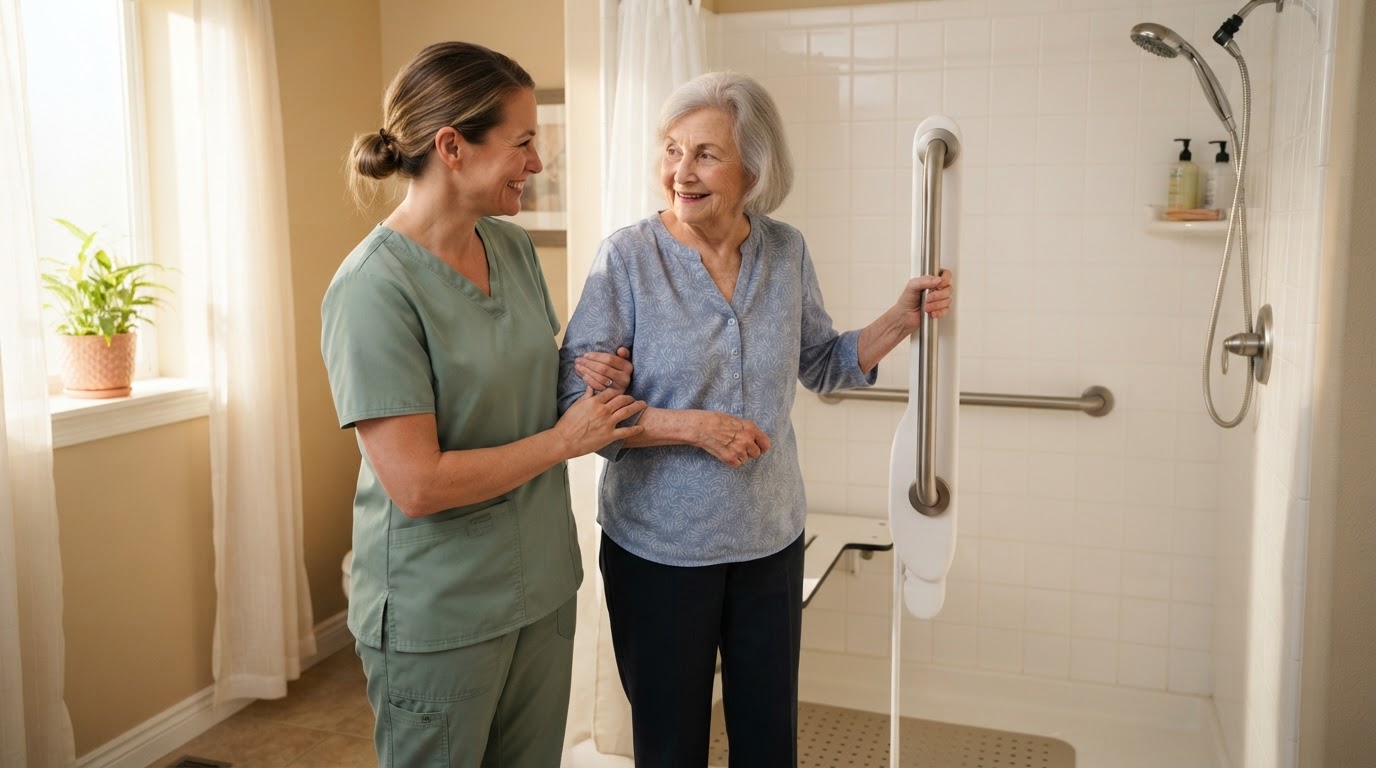
- Consider grab bars next to the toilet and inside the shower. Towel racks are not designed to hold body weight and should never be used as grab bars.
- A shower chair and a handheld shower head let your parent sit while bathing, which is safer and less tiring.
- Keep the floor dry. A caregiver can wipe up water after a shower and check that the bath mat has not bunched up.
- A raised toilet seat can make sitting down and standing up easier if leg strength has changed.
The Bedroom
Falls here often happen at night, when lighting is low and someone is half-awake.
- Place a lamp or a motion-activated night light within easy reach of the bed, and keep the path to the bathroom lit.
- Clear the floor of anything that could trip someone in the dark, including shoes, cords, and the edge of a rug.
- Make sure the bed is at a height your parent can get in and out of without straining. A bed that is too high or too low is a common, overlooked risk.
- Keep a phone and any glasses on the nightstand so there is no need to get up and search in the dark.
The Kitchen
Kitchens combine hard floors, reaching, and spills.
- Move the most-used items to lower shelves and cabinets so your parent is not reaching overhead or climbing for them.
- Wipe up spills right away. A caregiver helping with light housekeeping can keep floors dry and walkways clear.
- Check that throw rugs are secured with non-slip backing, or remove them entirely. Curled rug edges are one of the most common trip hazards in a kitchen.
- Keep a sturdy step stool with a handle nearby if reaching is sometimes necessary, and discourage the use of chairs as steps.
Stairs and Entryways
Stairs demand balance and leg strength, and entryways often have a change in level.
- Make sure handrails are secure on both sides of any staircase, and run the full length of the stairs.
- Add non-slip treads or grip tape to bare wood steps, especially the top and bottom stairs.
- Keep stairs completely clear of objects. A single item left on a step is a fall waiting to happen.
- Check outdoor entryways for uneven pavement, loose mats, and poor lighting, especially the path from the car to the door.
The Living Room
This room tends to collect clutter and furniture that has shifted over time.
- Arrange furniture so there is a wide, clear path for walking, especially if your parent uses a cane or walker.
- Secure or remove area rugs, and tape down any cords that cross a walking path.
- Make sure a favorite chair is easy to get out of. If it sits too low, a firm cushion or raised leg rests can help.
- Keep lighting bright and even throughout the room to avoid shadows that hide the edge of a step or a piece of furniture.
Beyond the Basics: What Families Often Miss
A safe home is only part of the picture. A few other factors raise fall risk in ways families do not always expect.
Ask the doctor or pharmacist to review medications. Some prescriptions and over-the-counter medicines cause dizziness, drowsiness, or drops in blood pressure that make falls more likely. A pharmacist can review your parent's full list and flag concerns. This is a conversation to have with the healthcare provider, not something a caregiver decides.
Check vision and footwear. Poor vision makes it hard to spot a step or a hazard, and worn or loose shoes make it hard to stay steady. An updated glasses prescription and supportive, non-slip shoes are simple changes with real impact.
Look into local balance and strength programs. Senior centers in Greenville and across Upstate SC often offer exercise or balance classes designed for older adults. The South Carolina Department on Aging connects families to Area Agencies on Aging and local programs that support safe aging in place. Regular movement is one of the best ways to maintain the leg strength and balance that prevent falls.
How Home Care Helps
A consistent caregiver in the home is one of the best fall-prevention tools there is, not because of any single task but because of what they notice over time. A caregiver who comes regularly learns your parent's normal walk, their usual steadiness, and the small changes that can signal growing risk.
That might be a slower shuffle to the mailbox, a new hesitation at the top of the stairs, or a rug that has started to slide. A caregiver notices these things and can let the family know before a fall happens, rather than after. For families who live far away, that second set of eyes is invaluable.
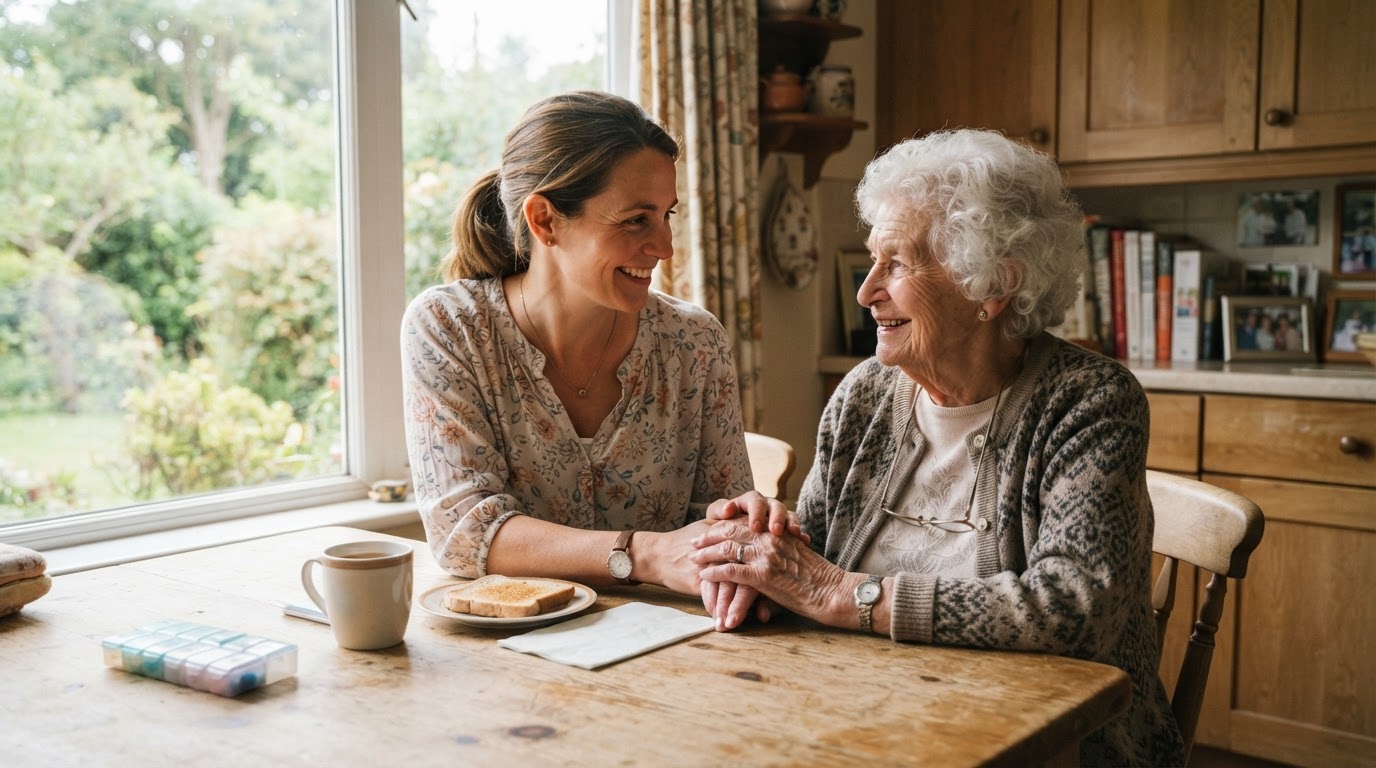
Day to day, a caregiver can help with personal care and daily living, offering steady support with bathing, dressing, and moving around the home so your parent is not navigating risky moments alone. They can keep walkways clear through light housekeeping, and provide medication reminders so prescriptions are taken on schedule, which helps avoid the dizziness that comes from missed or doubled doses.
The goal is not to take over your parent's life. It is to help them stay steady, confident, and at home.
Keeping a Parent Safe in Greenville and Across Upstate SC
If you are worried about falls and your parent lives in Greenville, you do not have to figure this out alone. We provide compassionate, non-medical home care throughout Greenville and the surrounding communities, including Spartanburg, Simpsonville, Greer, Mauldin, and Taylors.
Every home and every family is different. A free discovery call is a low-pressure way to talk through what you are noticing and learn what support might look like. Book a free discovery call, or call us at (864) 707-8176. We are here to help your parent stay safe and steady at home.
Wondering what support might look like for your parent?
A free discovery call is a low-pressure way to talk through what you're seeing. We serve Greenville and the surrounding Upstate SC communities.